4 Lessons From Watching Governance Games

Even near-perfect governance like Apache’s can get gamed by a determined and well-resourced player. What lessons can we learn from their experience? 

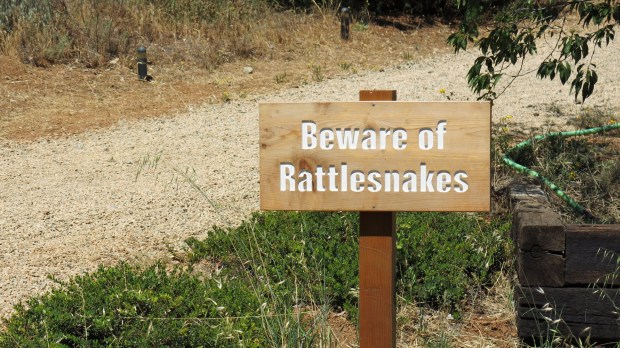
snake-warning_9391539040_o


I’ve previously written about the fact the Apache Software Foundation offers an exemplar of large-scale open source governance. Even with those supreme qualities, things can still go wrong. Apache offers some of the best protections for open source contributors but its mature rules can be manipulated by skilled politicians and/or determined agendas. What can we learn from their experience? Continue reading

Microsoft & Linux & Patents & Tweets

Fact-checking some tweets about Linux Foundation’s newest member and their harvesting of other members’ money.

unicorn

Microsoft recently joined the Linux Foundation while still asserting its patents against the rest of the membership. As I found that odd, I tweeted some casually-calculated statistics  about Microsoft’s patent revenues that seemed to me to simply be the aggregation of common knowledge. But maybe people have forgotten the details; at least two respondents asked me to substantiate the figures. Having struck a nerve, this post is by way of explanation. Continue reading

How Can Open Source Become User-Centric?

Including design and UX in a true community project is a challenging matter of balance because of the motivational model behind open source projects.

Mexican Hat rock

According to The Cathedral and the Bazaar, the key motivation for participants in open source projects is “scratching their own itch.” One consequence of this is co-ordination of contributions to support user-centric design is inherently an optional extra in a true open source project with multiple independent participants.  We all wish there was a way to get genuine user experience quality as a key dynamic of open source projects. But there are two big reasons that is challenging. Continue reading

Large-Scale Governance – 10 Apache Lessons

Starting a large-scale open source project? The Apache Software Foundation is the benchmark against which you will be measured.

Santa Cruz surfer

We’re now well beyond the point where open source has “won”. We’re seeing the open source idea starting to mature beyond even adolescence into adulthood. As it does so, our understanding and expectations of open source communities need to expand. Continue reading

Six Pathologies of Organisational Maturity

Maturing, successful organisations have recurrent, emergent patterns of failure that can sometimes be predicted and perhaps avoided.

Tree trunk absorbs spear tips of the fence next to it

Everything has a season, and as organisations age – communities, charities, companies, churches and more – they face similar diseases of time. These are emergent patterns of failure that arise not from mistakes but from the consequences of earlier success. In open source, we are seeing the same patterns emerge; this should not be a surprise. Continue reading

The Cost Of Open Sourcing Your Project

Accusing a company of “dumping” their project as open source is probably misplaced – it’s an expensive business no-one would do frivolously.

swan-m

If you see an active move to change software licensing or governance, it’s likely someone is paying for it and thus could justify the expense to an executive. Continue reading

FRAND And The Clash Of Industries

The largest forces in technology today – consumer-facing companies like Google and Facebook, business-facing companies like Salesforce, now even first-gen tech corporations like Microsoft and IBM – all increasingly depend on open source software. That means collaborative inter-company development of the software components and infrastructure technology these enterprises use for their business success. It’s enabled by the safe space created when they use their IP in a new way – to ensure an environment for collaboration where the four essential freedoms of software are guaranteed. Continue reading

FRAND Is Not A Compliance Issue

The European Commission has been persuaded by lobbyists to change its position on standards to permit the use of FRAND license terms for patents applicable to technologies within those standards. This is a massive mistake that will harm innovation by chilling open source community engagement.

Continue reading

TPP Harmful To Open Source

While some may assert that open source is not applicable in every circumstance, the right to demand access to source code in situations where it is appropriate is important to society as a whole. That’s why it is important to note — and protest — a clause in the Trans-Pacific Partnership trade agreement (TPP), and any other trade agreements carrying the same idea. As the FSF notes, chapter 14 includes a prohibition on governments requiring access to source code as a condition on allowing

the import, distribution, sale or use of such software, or of products containing such software, in its territory.

Just as Volkswagen was able to hide its evasion of emissions regulations behind proprietary code (which the US DMCA and laws like it globally even made it illegal to reverse engineer for scrutiny), so TPP enshrines the ability to hide behind proprietary code and prohibits governments from mandating its disclosure even when that’s in the interests of the citizens they serve. In the future, regulations should increasingly require open source for code critical to regulatory matters; this clause prohibits it. Shutting such an obvious avenue for society’s good seems premature and regressive.

It’s not enough to partially mitigate this ban on open source by allowing secret disclosure to governments. Our perspective is that simply having source made available for viewing by select parties is not sufficient. Source code related to public regulatory matters should be released under an OSI approved license and thus made available to all those who use the software. Doing so allows them to study, improve and share the software as well as to check that their lives are not negatively impacted by its defects. Ideally, all software written using public funds should also be made available as open source.

There’s much else in TPP to be concerned about, as the EFF notes, but this clause is especially regressive and is cause alone to reject the agreement. The clock is ticking — President Obama notified Congress on November 5 that he intends to ratify TPP on behalf of the USA — so the time to protest is now.

[Adapted by OSI as a Board position statement]

Microsoft and Red Hat Make Peace

That’s in the cloud at least. The deal that’s just been announced is certainly more comprehensive than the join marketing and hosting deals that usually show up.

  • .NET will soon be shipping in RHEL and included in OpenShift
  • support staff will be co-located so hybrid cloud customers have a single point of contact
  • there’s some kind of patent standstill between Red Hat and Microsoft

But claims “Microsoft Loves Linux” are premature; this is just the Azure team throwing big money at credibility, not a decision by the whole company to end hostilities. To do that they would need to join OIN.

Full story on InfoWorld.