Copyright Needs Radical Reform

Use of copyright today far exceeds the ways its framers imagined. We need reform, not just adjustments.
Cow Pulling Lawn Mower In Delhi

Copyright is back in the news in Europe. In the UK, the Digital Economy Bill proposes to increase the maximum prison sentence for online copyright infringement to ten years. Meanwhile, an extensive modernisation of copyright for the EU is also in progress, with a goal of making the treatment of copyright the same across Europe, especially in relation to digital media. Continue reading
5 Reasons Facebook’s React License Was A Mistake

Facebook’s BSD+Patent license combo fails not because of the license itself but because it ignores the deeper nature of open source.

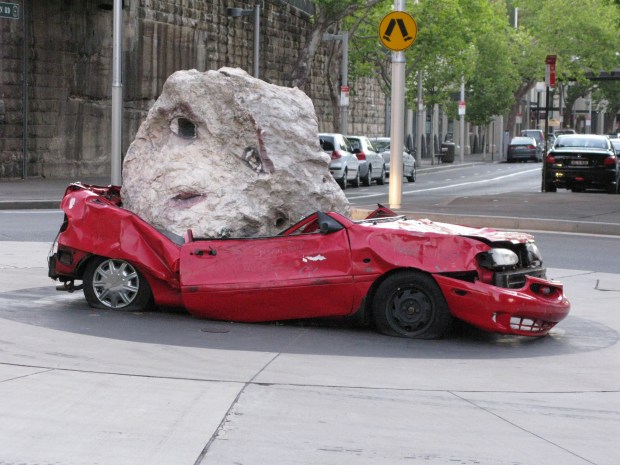
Beware Falling Rocks

In July 2017, the Apache Software Foundation effectively banned the license combination Facebook has been applying to all the projects it has been releasing as open source. They are using the 3-clause BSD license (BSD-3), a widely-used OSI-approved non-reciprocal license, combined with a broad, non-reciprocal patent grant but with equally broad termination rules to frustrate aggressors.
Continue reading

Why OSI License Approval Matters

Individual judgement about the presence of software freedom in a license is not the same as community consensus expressed through OSI approval.

Three Legged Buddah

Does it really matter if a copyright license is OSI Approved or not? Surely if it looks like it meets the benchmark that’s all that matters? I think that’s the wrong answer, and that OSI license approval is the crucial innovation that’s driven the open source revolution. Continue reading

DRM Is Toxic To Culture

In pursuit of market control now, deployers of DRM are robbing us of our culture in perpetuity by enclosing the future commons.

Dry Stone Wall

Ancient dry stone enclosure wall in Cornwall, England

It’s possible that you think that unauthorised use of copyrighted music, films and books is such a serious problem that it’s worth giving away a little of your convenience and freedom in exchange for stopping it. If you do, I’d like to suggest you think again – and time is running out.  Continue reading

Copyright: A Modest Proposal

Maybe if we stopped saying “copy” everywhere we’d find a way to fix copyright?

Ball Of Points

  1. Why is a song that I play digitally or a book I read electronically subject to extensive controls that are not considered appropriate to physical records or books? It’s because they are subject to licenses that can’t be applied by the seller to the physical works.
  2. Why can those licences be imposed on digital works? Because the use of digital works is considered subject to copyright, whereas the use of physical works is not because of a legal doctrine called “copyright exhaustion”.
  3. Why is that? Because the act of instantiating the work for use has been described as “copying”, allowing the rules surrounding copyright to be used as a threat to back up arbitrary license terms controlling use.
    Continue reading

Rehost and Carry On, Redux

A key value of open source is the ability to switch to a different supplier if your first becomes unavailable or unattractive. Forgerock is apparently withdrawing that value, on which it relied itself for its inception.

Swords

After leaving Sun I was pleased that a group of former employees and partners chose to start a new company. Their idea was to pick up the Sun identity management software Oracle was abandoning and continue to sustain and evolve it. Open source made this possible. Continue reading

Free vs Open

It’s been almost 20 years, but people are still arguing over “open source” and “free software”. Here’s why it’s the wrong argument.

Open hand, free bird

The term “Open Source” in the context of software was coined in 1998 by a group of experienced software freedom advocates frustrated by the challenges of helping corporations adopt Free Software. As the movement has energetically grown over the ensuing decades, it has been repeatedly necessary to remind people that framing it as a methodology is a construct chosen nearly 20 years ago to help cultivate executive acceptance and business promotion of software freedom. The frame is necessarily not the entire story, no matter how often newly-woke geeks may assert it should be and how evil it is not to say “Free Software”. Open Source is inescapably a part of the culture, philosophy and ethical construct that is software freedom, not an alternative to it. Continue reading

Growing The Community

How can you grow an open source community? Two blog posts from The Document Foundation (TDF) illustrate a proven double-ended strategy to sustain an existing community.                                                                                                            Spanish

Fern Fiddlehead

Since it was established in 2010, the LibreOffice project has steadily grown under the guidance of The Document Foundation (TDF) where I’ve been a volunteer — most lately as a member of its Board. Starting from a complex political situation with a legacy codebase suffering extensive technical debt, TDF has been able to cultivate both individual contributors and company-sponsored contributors and move beyond the issues to stability and effectiveness. Continue reading

Is The GPL Really Declining?

Is the GNU GPL “dying” or is that just the prejudice of those whose open source exploitation would be hampered by its use?                                              

gpl-phobia_6243461518_o

At the huge FOSDEM developer meetup in Brussels in early February, I attended a panel where speakers discussed whether the use of “permissive” open source licenses like the Apache License is now outstripping use of “viral” licenses, such as the GPL. The discussion was spirited, with advocates associated with the Free Software Foundation pushing back on the assertion the GPL is “dying”.

Continue reading

Give Generously! Seven Ways To Help Open Source

Should you donate money to the open source projects you use? Or is there a better way to help?

heavy-load_8081048699_o

Your business most likely depends on open source software. But are you playing your part to make sure it will still be there in the future? For that to happen, the projects where it is both maintained and improved need to flourish. Continue reading