WWW: Why the Web Worked and Gopher didn’t

The document CERN signed that made the technology behind the World Wide Web available without restrictions to everyone in the world showed up recently as part of CERN’s celebration of 20 years of the open web. Back at the start of the 90s, I was at IBM working on video conferencing (you’ll still find my name next to the well-known port number allocation for it), and among my responsibilities was making information available on the newly-popular Internet. We had a web page for our project, and did consider the idea of publishing information through another, much more widely used technology of the time – called Gopher. However, doing so was more complicated, and also we were concerned that running our own server might require some sort of license. So we stuck with just a web page.

Our experience was duplicated all over the world. Despite being very widely used, Gopher stagnated in the face of an open alternative. People don’t like to have to ask permission to get their job done, so given a choice between a technology that can be used without having to seek permission and one which requires approval from its owner (and all the corresponding bureaucracy that goes with that with ones employer) the decision is easy.

People have asked “what would have happened if the Web was patented”. The answer is there would never have been a web. It would have been an interesting project stuck in a lab somewhere, unable to get any traction against the more widely used Gopher and probably never heard of. What made the WWW was CERN’s decision to make it freely available. We should be immeasurably grateful for that enlightened decision.
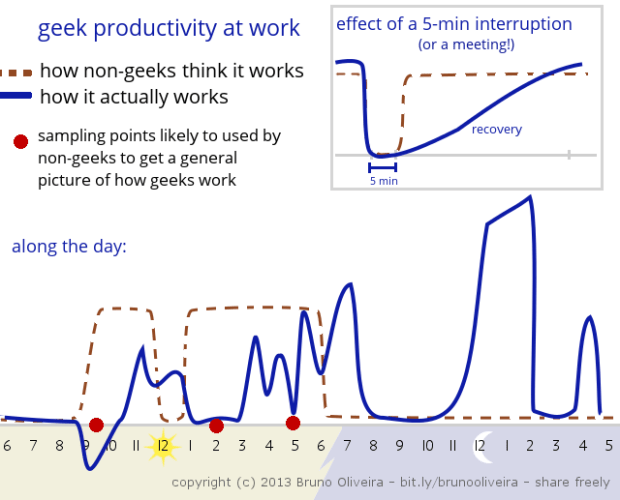
It’s a public holiday here in the UK today, so here’s a truthy graph instead:

Geek Productivity

Geek Productivity

Stopping the Snoopers Charter isn’t Enough

In a welcome move, Nick Clegg announced his opposition to the communications data bill (CDB) last week. His article in the Telegraph listed five reasons why CDB went “too far” in its attempted legislation. Among those reasons was the ease with which competent criminals could sidestep the effects of CDB and the alarming precedent the UK government would be setting for other countries in the scope of its jurisdictional claims. He’s not on his own; these arguments and many more have been brought against CDB from a wide range of opposition.

Continue reading

On Tour

Simon is heading to the USA soon, and will be at the following venues:

If you would like to meet him or even book him for your own event, please let us know and we’ll see what we can do.

Another Meshed OIN Licensee

After an introduction to Open Invention Network by Meshed Insights Ltd, the fast-growing US open source professional services company Open Software Integrators llc have signed up as licensees to join the mesh of mutual patent defence OIN offers.  Congratulations, and welcome!

Migration Needs A Plan

Do open source mandates work?  Plenty of entities have tried to apply an open source mandate, requiring use particularly of open source office suites like LibreOffice. But it takes more than just a decision or a mandate; to successfully gain the benefits of open source in the enterprise, you also need a thoughtful migration plan. Read about this in our article today at Linux Advocates.

Joining Open Invention Network

Open Invention Network is a novel company formed to operate patent defenses for open source developers. It owns a portfolio of patents relevant to key open source technologies, runs a defensive publication scheme and operates a patent cross-licensing network of well over 500 companies. I’m pleased to announce that Meshed Insights has joined the Open Invention Network as a licensee in that network. This move both demonstrates our commitment to minimising patent risks throughout the open source community and also offers us some protection against patent aggression.

We have also reached an agreement with OIN to represent them at mutually agreed events and to assist clients in themselves becoming Open Invention Network licensees. If you are interested in becoming a licensee, which you most likely will be able to do free of charge, please contact us.

Welcome!

Welcome to Meshed Insights!  Founded in 2012 by Simon Phipps, we are a management consulting, community engagement and editorial content company focussing on Free and Open Source software. We help

  • communities build and change governance and licensing;
  • companies evolve their business strategy to responsibly benefit from open source;
  • publications deliver insights on open source, open standards and digital rights to their audiences.

If you need any of these services, please do get in touch!